

Travelling from Mumbai to Goa throws up a whole of options.
One can fly …wasting an hour at the waiting hold and then spend another lifetime waiting for your baggage – which is the sophisticated word for your ordinary suitcase, not the stuff you carry in your box of grudges.
Or you can drive … (The best of luck in finding the road among the potholes).
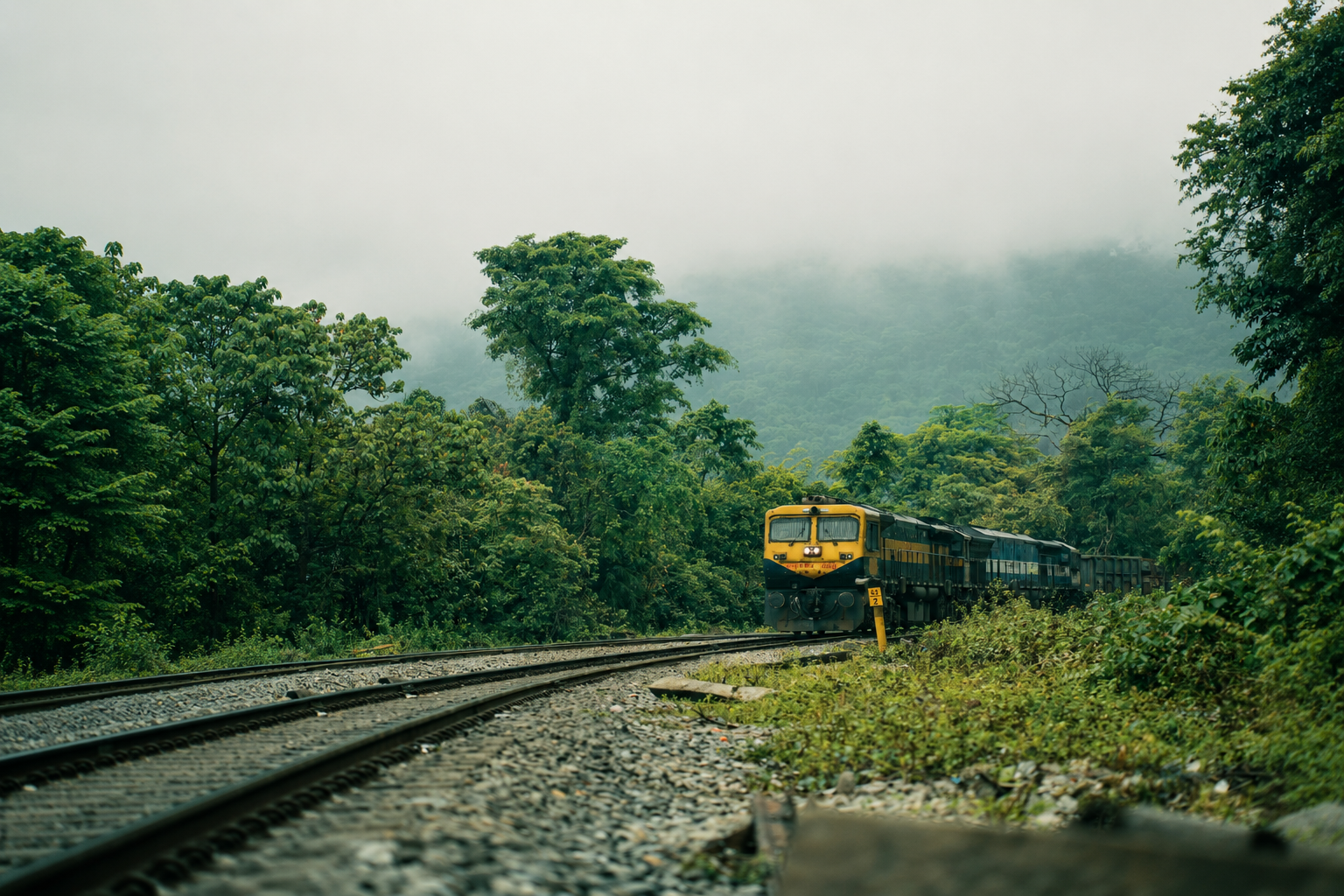
Or you can take the new train from Bandra to Margao. On the web page, it looks like a swanky Vande Bharat; when it does appear on the platform you think of the old days when you used to hope that One Day Bharat will have wonderful trains. But you’re at the Bandra Terminus by 6.30 am and the platform is empty. The scheduled departure is 20 minutes away. Where are the milling crowds that had placed you on the Waiting List?
The train rolls in around that time and the crowd gathers, not unlike Churchill’s storm clouds, and you wonder … will all the people be able to board by 6.50 am? Your wonder turns to awe. The compartment is full by 6.49… families launch coordinated boarding operations that would impress military strategists. And inside the coach, things settle down quickly. Bags find their niches. Children claim window seats. Elderly passengers distribute advice to no one in particular. You, with your single backpack feel inadequate. And you wait, anticipating that jerk that means you’ve started moving… and you wait … till the man with the tiniest paper cups in creation comes along … Rs.15/- please. The quantity of tea was between a sip and a gulp. But you’re fine. Some corner of your mouth and the gullet did feel the warmth and the suggestion of ginger….
The train moves out at 7.35 and you are amazed at the general nonchalance of your neighbours. While you look at your wristwatch and the mobile and confirm the time beyond doubt – and lament over the lack of punctuality – the others are busy … a moving festival of humanity, with half-opened snacks, and mild confusion. You are reminded, once again, that a journey by train provides a masterclass in Indian sociology, advanced luggage management, and the physics of balancing yourself in the toilets while the train negotiates the umpteen points as you move into the next station.
If you ever felt “important” at the airports, now is the time to shed it all. Everything here is designed to remind you that you are merely one among millions. Your immediate neighbour has enough luggage to suggest permanent migration. A seat beyond accommodates a middle-aged gentleman with three suitcases, two backpacks, and what appears to be a pressure cooker wrapped lovingly in a towel. How he managed that in the Olympic dash into the compartments when the doors opened is a matter of awe in itself.
Then, as concrete gives way to greenery and towers surrender to hills, the air changes. The countryside moves at a graceful pace. Tiny villages appear and disappear like scenes from a forgotten movie. Some passengers suddenly realise the existence of windows – and phones drop to their laps. Some say it out loud: Wow! Others just soak in the landscape ….
Then come the snacks. Within minutes, meal-sized snacks materialize from bags that appeared far too small to contain so much. Meanwhile, you sit proudly with what now looks like a tiny pack of sandwiches.
The train continues southward through tunnels and over bridges. Just when you settle into daylight, another tunnel arrives. And then another.
Every tunnel triggers the same sequence.
Darkness. Children scream with delight. Someone giggles.
Then someone realises that there are lights – and what switches are for.
The tunnels are followed by spectacular bridges that make you feel you are floating over the rivers and valleys. It is impossible not to admire the engineering that made this route possible… admiration that is frequently interrupted by the vendor screaming out his wares: “Bread-amlet” and “Lonavala chikki” and “Chai! Chai! Chai!” There’s a peculiar rhythm among them and you feel the need for another cup of tea. This time, from the pantry car, it is a larger cup for Rs.10/- – and you regret the earlier one.
By evening, conversations have blossomed throughout the coach. One of the magical aspects of Indian train travel is that complete strangers can discuss their life stories with you. Maybe you have maintained a reserved silence so no one bothers you. But you can hear them all:
Travel tips while in Goa coupled with politics in the tiny State;
Recommendations for hotels and restaurants and beaches;
The best place for fish-curry and rice;
One person sitting opposite speaks (above the surrounding din) to someone about the fraud and subterfuge and betrayal by family members – all within about twenty minutes. You could have easily given him a solution to his problem – if only he had asked.
And nobody, absolutely nobody is concerned with the fact that the train was running about an hour late.
At Sawantwadi, it is dinner time. The loads of food brought from home were all exhausted by tea-time. And the pantry-car trays appear with the peculiarly appetising aroma of the railways. Passengers compare meals they have had in other trains with remarks that would qualify them as food critics for Michelin. It is dark outside. You were to be at Madgaon at 10.40 pm. It’s already 10…and you have yet to reach Karmali, the penultimate station. But the food debates seem to keep everyone busy.
And then dinner is done. The train crosses Karmali. It is an hour’s run to Madgaon but the atmosphere changes. Suddenly. There is a quiet hush of excitement. Passengers freshen up – lipstick and powder packs come out. Bags are reorganised. People who had talked to each other like long lost friends, gather their belongings with quiet efficiency. Stealthily, right under your nose, you find the luggage piling up at the door. Everyone politely vies for a position to get off the train first.
You manage to step over the mess and get out before anyone else in any case. And as you step on to the platform you realise you have arrived at various conclusions:
The journey for one – but it was not just a physical movement from point A to point B. You have moved through an experience itself – like a theatre in motion, a community at its most unguarded, against the backdrop of spectacular landscapes and cheating chai-walas and dark tunnels, and a language that binds all of us together – one way or another.
Yes, the real connection begins with: Would you like some homemade gujjiyas?


