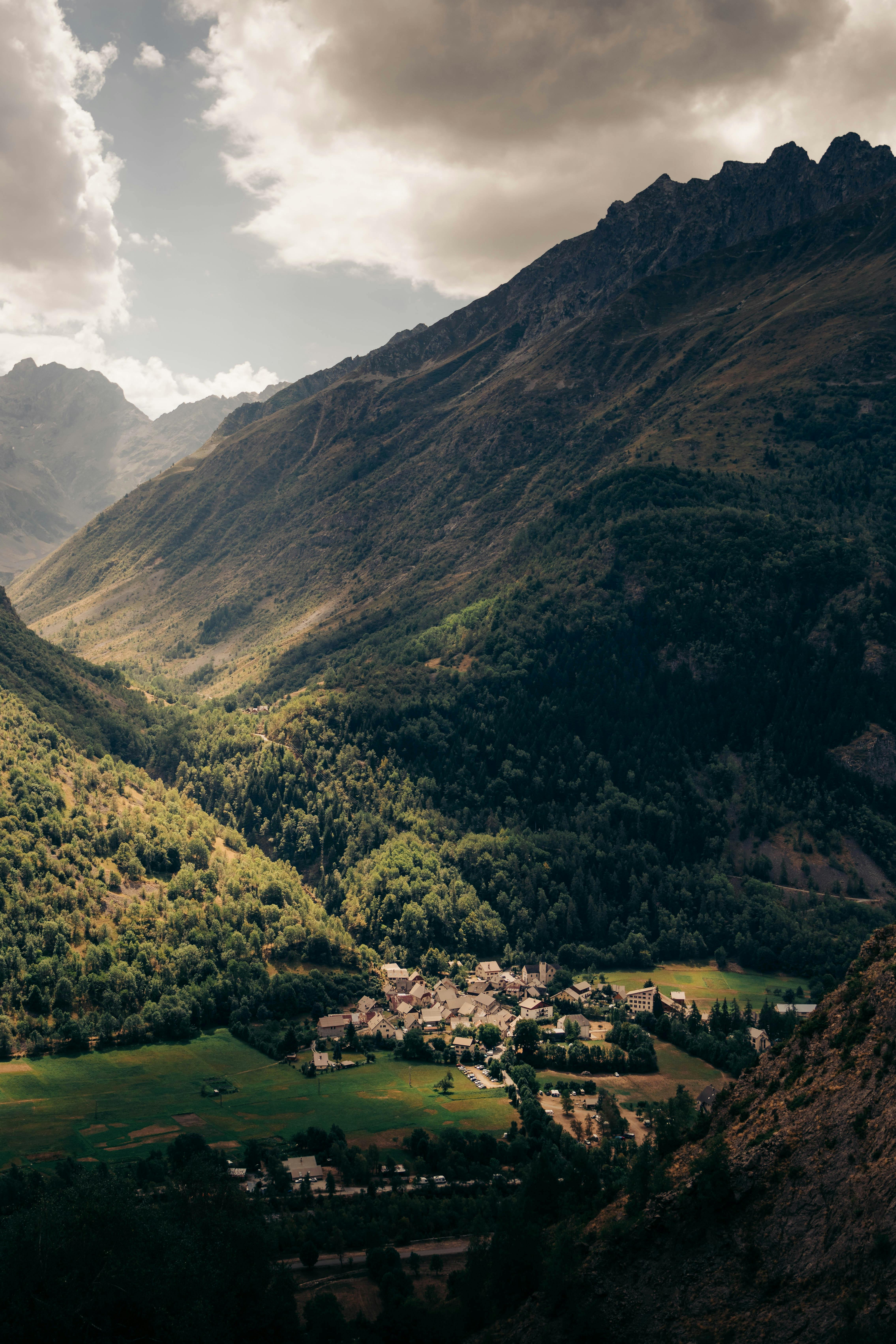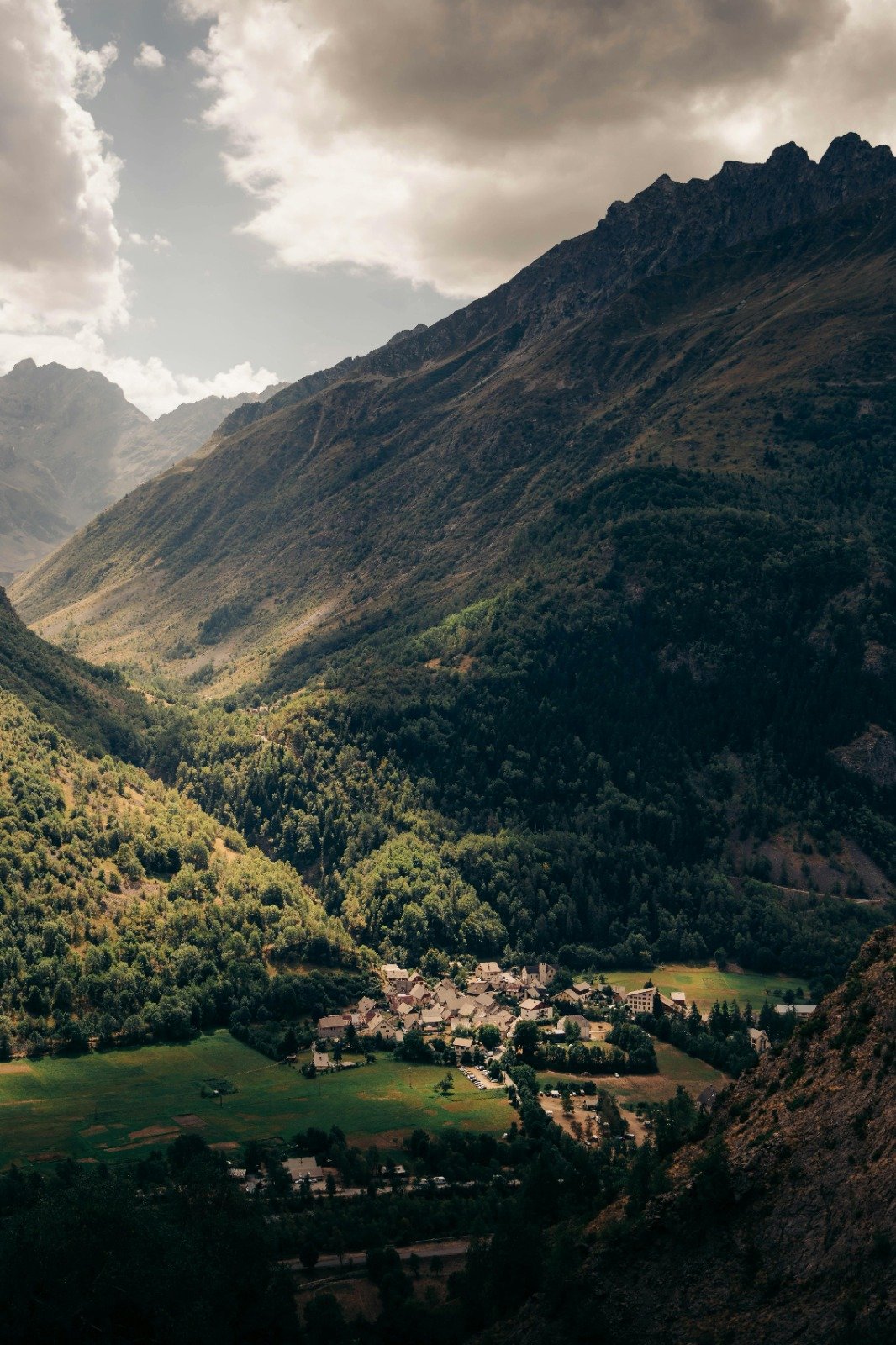
The air changed before the road did.
Wet earth. Something flowering she couldn’t name. The path wound through the Velliyaar – the valley at the heart of Mounamalai – and the afternoon light fell across it in long silver strips, like pages of a book left open in the sun.
Then she heard it. Laughter.
Distant. Warm. Coming from somewhere, the trees were thickest.
It was the only compass she needed, and she walked toward it.
That was Nila. Eleven years, forty-three villages, one backpack that had never once been fully unpacked. She wrote for a travel magazine that paid her just enough to keep moving.
Two old posts stood at the entrance – worn, weathered. Between them, a board so faded she had to lean in to read it.
Sernthur.
Dried flowers strung carefully above it. Like someone had dressed the doorway that morning.
She ducked through.
Small fires. Children running barefoot between huts, ankles muddy, voices filling every corner of the air. Women in deep-bordered cotton sitting in doorways, hands never still. Eyes that lifted when she entered and didn’t look away.
Nila walked in with a smile she didn’t plan.
Manimaran came forward. Unhurried. White-haired. He pressed his palms together slowly.
“Vaanga, vaanga,” he said. Warm as the fires behind him.
They sat her down on a woven mat. Rough under her palms. No one asked where she had come from.
A clay cup appeared – warm, spiced, something she had no name for but finished completely. It warmed her deeply. Then a banana leaf. Rice still steaming. A dark curry that smelled of smoke and tamarind. Something bright and sour that made her eyes water and then immediately want more.
Around her, Sernthur moved the way people move when they have never learned to hurry.
Later, beside the firelight, she opened her notebook.
An old man mending nets by firelight. Two women singing – no words, just sound finding sound. A dog barked once, then settled.
She wrote until the fire burned low. Manimaran appeared at her elbow, gestured toward a small hut at the edge of the village.
“Vaanga,” he said. Come.
She slept the moment her head touched the mat.
She stayed two more days.
The Sernthavar fed her, showed her their temple, their weaving, their evening offerings at the forest edge. A small girl named Kavitha followed her everywhere, pointing at things – a butterfly, a clay pot, a passing elder.
One afternoon Nila asked casually which road led out toward the next town.
The women weaving beside her paused.
One smiled and handed her more tea.
That evening she wrote again.
They do not include strangers here. They include everyone. There is no word for outsider in the way they look at you.
The third evening she packed her bag. Folded everything. Tightened every strap. Her editor would not believe what she had found. Three pieces at least. Maybe four.
She fell asleep to the Velliyaar running somewhere below.
******
She woke before dawn. Old habit.
The village was breathing – slow, deep, still asleep. She stepped outside into the blue-grey dark. Cool air. Damp earth. The smell of last night’s fires.
She walked the path back to the entrance.
The dried flowers above the posts were fresh.
She didn’t remember anyone replacing them.
She stepped forward.
Something stopped her.
Not a wall. Not a hand. A resistance. Like walking into water that didn’t want to be crossed.
She tried again.
For half a second, standing before the gates, she forgot why she had wanted to leave at all.
Then it returned sharply.
She pushed.
Nothing.
She walked the entire boundary.
Still nothing.
“I did the same thing.”
Nila turned.
A woman stood a few feet behind her. Silver hair loose around her shoulders. A Sernthavar border on her saree – but her face. Her face was from somewhere with traffic and filter coffee and jasmine sellers at street corners.
“Three days,” the woman said. “I walked this line for three days.”
“You’re not …”
“One of them?” A small smile. “I am now.”
Somewhere in the village a fire was being coaxed back to life. The smell of woodsmoke drifted through the trees. A child’s voice, high and unhurried.
“There has to be a way,” Nila said. Her voice came out smaller than she intended.
The woman looked at her the way you look at someone standing exactly where you once stood.
“The moment you stepped through those posts,” she said quietly, “you became Sernthavar. One of their own.”
A pause.
“There must be …”
“There isn’t.”
The fresh flowers swayed above the posts. Nila stared at them. Vivid. Carefully strung.
She understood then who had put them there. Every morning. For how many years she didn’t know and didn’t ask.
“What do I do now?” Nila asked.
Valli was already walking back toward the smoke and the warmth and the sound of a life that hadn’t asked permission to continue.
She didn’t turn around.
“You eat,” she said. “The food here is good.”
******
Nila stood at the gates of Sernthur until the sun found her.
Her notebook was still in her hand.
She opened it to a fresh page.
No word for outsider.
No word for goodbye either.
**********
No. of words: 879
Image Courtesy: by Lorenzo Castellino for pexels.com
**********
Glossary:
- Sernthu (Tamil): To join; to be together or united
- Sernthur: The name of the village (derived from Sernthu)
- Sernthavar: A villager or resident of Sernthur
- Mounamalai: The hills where Sernthur rests
(derived from mounam – silence, malai – hills) - Velliyaar: The Valley of Mounamalai
- Vaanga: Come, welcome