

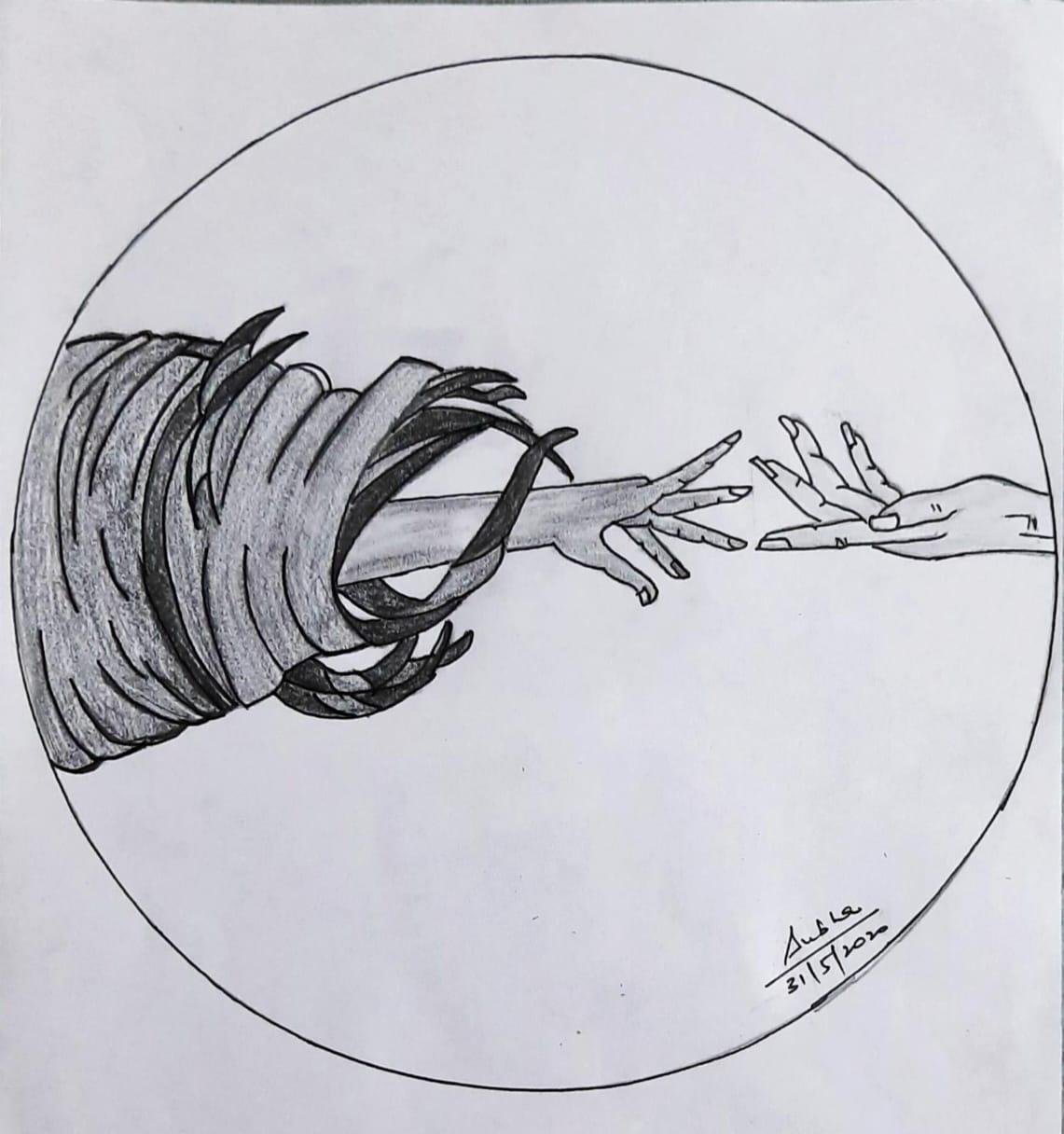
The valley did not appear on most maps. Those who tried to mark it often abandoned the effort midway, as though something unseen resisted being named.
The people who lived there called it Khepru, after the rising sun, though sunlight reached the valley late and left it early, reluctant to linger.
Sandstone ridges rose like broken teeth around it, guarding a silence older than memory.
At the valley’s center stood a pyramid, modest in size, but heavy with an authority no one questioned.
It was not built to impress.
It was built to contain.
There was only one rule in Khepru.
Nothing given to the dead must ever return to the living.
The rule was not debated or explained. It was inherited, like breath. Children learned it before they learned to count. Elders repeated it without fear, only reverence. Every dusk, without fail, the villagers carried offerings to the pyramid, bowls of grain, jars of water, fruits, cloth, and small personal objects. These were placed beside the preserved bodies resting within, wrapped carefully in linen, their faces hidden yet somehow watchful.
“They must not remember,” the elders would say.
No one asked what they might remember.
Life in Khepru was measured. No one hoarded, no one starved. The wells were never emptied, but never overflowed. Harvests were divided not just by need, but by obligation. A portion always belonged to the pyramid. It was not a sacrifice. It was maintenance.
Mara had followed the rule all her life. She had never questioned why untouched food was left beside the dead, why water that could quench the living was sealed away in darkness. She had accepted that some things existed beyond reason.
Until her father and brother died…from fever.
Sefu was young – too young to be wrapped and laid among the silent ones. His laughter had once filled their small house, and Abi! She missed his care and affection so much! His absence hollowed her insides.
When they carried them into the pyramid, Mara followed until the entrance. There, she was stopped.
“Beyond this, they belong to them,” the elder said gently.
Them.
It was the first time the word unsettled her.
Days passed. The offerings increased. More food, more water, more care. Yet inside her home, Mara noticed the subtle shifts, smaller portions, careful sips, her mother’s quiet reassurances. The balance was tilting, though no one spoke of it.
Grief sharpened into something else. Not defiance, but a quiet question.
If the dead do not eat, why do we feed them?
One night, when the valley lay wrapped in stillness, Mara walked to the pyramid. The wind had stilled, as though the valley held its breath. The entrance had not been sealed properly after the evening ritual. A narrow opening remained.
Inside, the air was thick and unmoving. Rows of mummified forms lay in perfect arrangement, each with offerings untouched by time. Bowls still full. Jars still sealed. Nothing disturbed.
Nothing consumed.
She found Sefu easily. His wrappings were newer, pale against the dimness. Beside him sat a bowl of dates, a jar of water, and a carved toy he had loved.
Mara hesitated.
Then she reached for the jar.
The water was cool. Real. It belonged to thirst. She drank slowly, waiting, for the air to shift, for something to change.
Nothing happened.
She took a date.
Still nothing.
When she stepped out, the world seemed unchanged. The stars blinked as before. The valley slept.
For three days, nothing happened.
On the fourth, old Tarek was found still in his bed. His body was not broken, but drawn tight, as though something had been quietly taken from within him. His eyes were open, but empty.
By the next evening, two more followed.
The village gathered, unease replacing certainty. The elders spoke in hushed tones.
“They are remembering,” one said.
Mara returned to the pyramid before dawn. She did not intend to enter, yet she did. The entrance stood open again.
Inside, the stillness had changed.
The jars were no longer full.
The bowls were no longer untouched.
Something had shifted, subtle, but undeniable.
Understanding came without warning.
The offerings had never been meant to feed the dead. They had been meant to hold something back. As long as the living gave, the dead remained still, unremembering.
But she had taken first.
And in doing so, she had reminded them.
Not of life.
But of hunger.
Mara stumbled back, the weight of it closing in. The rule had never been about devotion. It had been about distance. A fragile boundary between those who needed and those who must never need again.
That evening, the pyramid was sealed.
No offerings were made.
No words were spoken.
And in the nights that followed, Khepru did not sleep as it once had. The silence deepened, not into peace, but into watchfulness. Doors remained closed. Lamps burned longer. Every breath was measured.
Because in Khepru, the living learned too late
Some hungers are not buried with the dead.
Glossary: Abi – meaning Father
The inspiration comes from ancient Egyptian funerary practices, tied to the belief in the afterlife (Ka and Ba) – the soul needed sustenance beyond death.
The dead were buried with:
Food
Water
Personal belongings
This was While they didn’t believe the dead would become dangerous if unfed, the idea that:
“The dead continue to need”, resonates with our practices too.
“Hunger” can represent greed, grief, longing, unfinished desires
“ If you don’t resolve something, burying it doesn’t end it – it transforms it.”


