

Priya was sorting through Divya’s old cupboard when she found the photograph. Her daughter at eight, dressed in a half-saree for a school function, striking a Bharatanatyam pose.
She’d been so proud that day, flushed from the stage lights and the clapping. On the auto ride home, she’d pressed her face against Priya’s arm. “Can I join the regular classes, Ma?”
Priya had said what her mother once said to her. “Let’s see. Maybe next year. Focus on studies now.”
Next year never came. Divya grew up and flew the nest.
After Appa died, Amma moved in, and now it’s just the two of them, rattling around in rooms that used to hold so much noise.
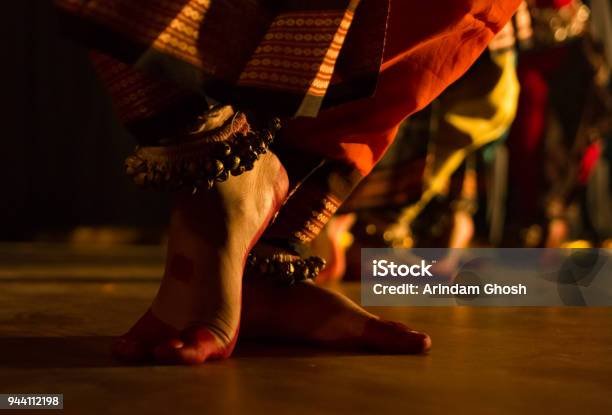
Priya put the photograph back and kept searching. On the last rack, under Divya’s old uniforms, she found them. Amma’s ankle bells. Wrapped in cotton, set aside decades ago, waiting.
That evening, she asked Amma, “Can I have these?”
Amma looked up from cutting vegetables. “What for?”
“I want to learn Bharatanatyam.”
The knife paused. “At forty-eight? Your knees will give out.”
“Maybe.”
“People will laugh.”
“Let them.”
Amma went back to cutting. “Do what you want.”
That night, she called her husband — he was in Chennai that week, or maybe Hyderabad, she’d stopped keeping track — and told him.
He laughed. “Dance? Now? Keeps you busy, I suppose.” He didn’t ask about it again.
But when Divya video-called the next day, she beamed. “Happy Women’s Day, Ma. And finally, you’re doing something for yourself.”
Priya felt something twist in her chest. “I should have let you learn when you were small. I’m sorry.”
“Ma.” Divya’s voice was soft. “It doesn’t matter now.”
But it mattered to Priya. That she’d denied her daughter what she’d been denied, continuing the chain without even realizing it.
_______________________________________________
The Nruthya Kala Academy sat wedged between a medical shop and a xerox center. A woman in her sixties looked up as she approached.
“I want to enroll.”
“For your daughter?”
“For myself.”
A pause. “How old are you?”
“Forty-eight.”
“Have you danced before?”
“No.”
“Then why start now?”
“Because I told myself later for so long that later became never.”
The woman looked at her a moment longer, then wrote her name in the register. “Classes every Tuesday and Friday. Don’t expect it to be easy.”
It wasn’t. The first month, everything hurt — her knees, back, feet. She’d wake at night with cramps and lie still, waiting for them to pass.
Whenever she practiced, Amma would stand at the kitchen doorway, watching.
“Your araimandi is too high.”
Priya adjusted.
“No. Bend from here.” Amma walked over, pressed her hand against Priya’s lower back. “Hold.”
Priya held. Her thighs burned.
“Better,” Amma said, and went back to the kitchen.
This became routine. No praise, no discouragement. Just corrections, in the same flat voice she used for everything.
By the fifth month, she could hold the araimandi without shaking, complete a full thillana without stopping. Her teacher announced a small student performance. “You should participate. Show people it’s never too late,” she said.
That night, Priya mentioned it at dinner. “There’s a performance next month. Will you come?”
Amma served more rice. “We’ll see.”
“I want you there, Amma.”
“I said we’ll see.”
_______________________________________________
A week before the performance, Priya was stitching the fall of her practice saree when Amma came to her room.
“You should stop this.”
Priya looked up. “Stitching?”
“Your dance.” Amma’s face was unreadable. “Stop now.”
“Why?”
“Because…I can’t watch this anymore.”
“Can’t watch what?”
“You. Dancing. Living the life I was supposed to have.” The words came faster now, decades of silence breaking. “You think I didn’t want this? I was invited to perform at Kalakshetra when I was nineteen. But I was married and packed off. Your father didn’t ask me to stop, but winced every time the bells jingled. So I put them away. Then you came along. I fixed your plate, fixed your hair, fixed your homework, and somewhere in all that fixing, forgot to fix myself.”
Priya’s needle had stopped moving.
“And you?” Amma’s hands were shaking now. “You’ve a teacher praising you. A daughter cheering for you. A husband too indifferent to even object. You get to choose this. I never did. So don’t ask me to sit there and clap for your freedom when I’m still carrying the weight of everything I gave up.”
“When you kept coming to the doorway, I thought…”
Amma was quiet for a moment. “I was correcting your form. Not encouraging your foolishness.”
“Amma…”
“I won’t be there.” Her voice cracked.
_______________________________________________
The auditorium was filled with proud parents much younger than Priya.
Her hands shook through the first alarippu. But somewhere in the jathiswaram, her feet found the floor the way Amma taught her — weight low, spine straight, each adavu landing clean. By thillana, she wasn’t thinking anymore. Just moving. The way she should have been allowed to, forty years ago.
The applause, when it came, surprised her.
She stood in it for a moment — and didn’t move away this time.
In the last row, half-hidden by the door frame, Amma stood, handbag clutched against her chest, face unreadable in the dim light.
She didn’t clap. But watched every movement, every adavu, as her daughter moved across the stage she’d once dreamed of standing on herself.
And when the lights went down, she stayed a moment longer in the darkness before turning to leave.
_______________________________________________
Glossary:
Araimandi – “half-sitting” posture used in Bharatanatyam
Thillana – the energetic concluding piece of a Bharatanatyam recital, known for its fast tempo and intricate footwork.
Alarippu – the traditional opening piece in a Bharatanatyam recital
Adavu – Often described as the “alphabet” of Bharatanatyam, they are the basic unit of movement in Bharatanatyam
Jathiswaram – a technical dance item in Bharatanatyam, performed to a musical composition in a specific raga and tala


