

Aariz didn’t chase the ball.
He chased where the ball would be.
At practice, the other boys ran after it in a pack. Aariz ran somewhere else entirely. Two seconds later, the pass arrived exactly at his feet.
Coach blinked, “How did you know?”
Aariz shrugged. “He always passes when his left shoulder drops.”
The coach stared at the defender, who had indeed dropped his shoulder.
After that, nobody called Aariz “striker” or “kid.”
They called him “midfielder,” the way adults say someone’s real profession.
He played the U10 league on Saturdays… not the fastest, not the strongest, but the one everyone sought in trouble.
“Give it to Aariz!” was basically their official formation.
At home, he watched matches instead of cartoons.
His hero was Frank Lampard – not just for the goals, but because he solved the game like a puzzle. Aariz paused the television constantly, trapping his family in explanations.
“See? He’s watching the defender’s feet, not the ball.”
Sana threw a cushion at him. “Unpause. I want dinner.”
From the doorway, his father said, “When you become famous, remember I supported you.”
“You only want a bigger TV,” Aariz said.
“I am a long-term investor.”
His mother called from the kitchen, “My long-term investor, clean your dishes left in the sink. And you, future football star, finish your homework.”
Homework never worried Aariz. Math was patterns. Science was cause and effect. Football combined both, making it the best thing in the world.
He kept a notebook beside his bed, filled with arrows, formations, and ideas for matches not yet played. His boots stayed polished. His jersey folded carefully every Friday night before Saturday league games.
U11 trials were only three weeks away.
He had already planned how he would play.
******
During practice, Sameer sent a simple pass toward him.
Aariz stepped forward, and the ball rolled past his foot.
The boys laughed.
“You retired mid-match?”
“Sunlight,” Aariz said quickly.
The next day, he misjudged the distance again. Then he slowed mid-run, pressing his forehead.
“You okay?” Sameer asked.
“Yeah… for a second the ball looked doubled,” Aariz said, frowning.
At dinner, he was quiet.
“Headache?” his mother asked.
“Just tired, Mom.”
That night he opened his notebook to draw a formation. He stared at the page longer than usual. The arrows did not arrange themselves in his head the way they always had.
He closed it.
“I’ll finish tomorrow.”
Later, he overheard his parents in the hallway.
“It’s probably nothing,” his father said.
“He never misses passes,” his mother replied. “And he forgot his homework today. Aariz doesn’t forget things.”
“Kids get headaches,” his father countered.
“He held his head like it hurt inside, not outside,” she whispered.
After a long pause, his mother sighed. “We’ll take him tomorrow. Just to be safe.”
His father exhaled.
Aariz went back to bed without asking why.
The next morning, the clinic visit was meant to be precautionary.
“Just a scan,” the doctor said.
The machine hummed like a tunnel, cold under his feet.
Aariz stepped back. “What if I get stuck inside?”
Sameer stood beside him. “I’ll hold you.”
“You can’t come in,” the nurse said, then paused. “Only his foot. Only for a moment.”
Sameer lay awkwardly beside the sliding table and gripped Aariz’s ankle tightly as the bed moved into the scanner.
“I’m here.”
Aariz shut his eyes. “Don’t let go.”
For the first time, the boy who predicted passes needed someone to keep him from feeling lost.
******
The matches stopped slowly.
First tournaments, then practice, and then the evening walks downstairs.
Ever since the headaches began, the doctors said he needed rest.
Sameer kept coming, giving loud commentary from the bedside.
“Terrible defending. You would’ve scored that.”
Aariz pointed at the IV stand. “Assistant referee is biased.”
His mother folded his jerseys near his pillow. Sana polished his boots and left them beside him without a word.
A week before the U11 league began, the coach called.
“He’s not playing,” his father said.
There was a pause.
“He can still come. Just to watch.”
They took him that Saturday.
From the gate, the ground looked unchanged. Uneven white lines, a leaning fence, and the tea stall outside. Aariz held his father’s arm as they walked toward the touchline.
Sameer ran over first. “You made it!!!”
Coach placed a chair near the goalpost. “Best seat in the stadium.”
The whistle blew. The boys ran. Dust rose under quick feet. Aariz followed instinctively, leaning with every pass as if his legs remembered.
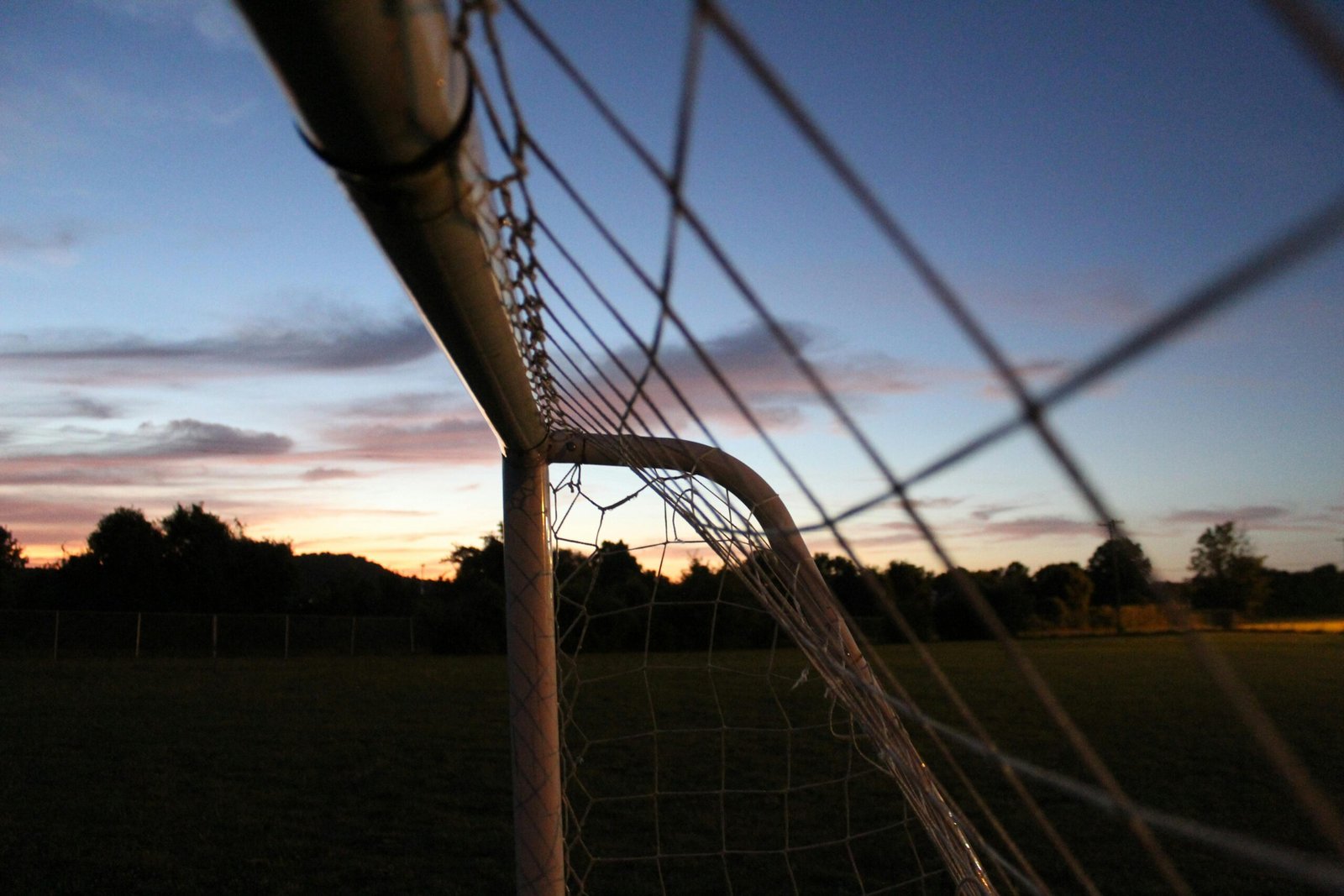
He could see chipped paint on the bar, knots in the net, and the bare earth where keepers always stood. All those years, he had imagined long runs, wide distances, endless grass.
Now the field felt smaller.
Not because it had changed, but because he could no longer cross it.
He rested his hand on the post, warm from the sun.
Then he noticed the post beside him.
“Abbu…” he said softly.
“Yes?”
“It used to be far.”
“The goalpost is closer than it used to be,” he added.
“I can see the whole game from here.”
For the first time, he understood.
The smallest stadium was not this ground.
It was the future that once stretched wider than the pitch, and now seemed trapped between the posts he could no longer reach.
*****
Image Courtesy: Ronnell Macklin via pexels.com
No. Of Words: 890 Words (Including the title)
Thank you for reading! I’m all ears for your honest feedback 🙂




While reading not only the flow kept me engrossed but also I realised how well curated it is because you have actually learn the technical aspects too. This shows the writer is not only good with the words but also is intelligent to make sure everything is rightly understood and placed. In love with this. You are am amazing writer, My eyes welled up reading it , beautiful my love, keep shining.